
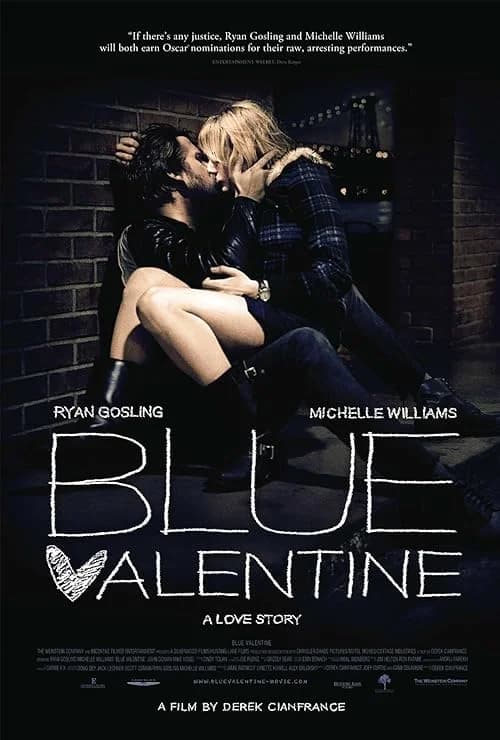
About Blue Valentine
Blue Valentine (2010) is a devastatingly intimate portrait of a marriage in its final, painful stages. Directed by Derek Cianfrance, the film masterfully intercuts between two timelines: the hopeful, passionate beginnings of Dean (Ryan Gosling) and Cindy's (Michelle Williams) relationship, and their present-day reality, defined by resentment, disappointment, and a love that has curdled into something unrecognizable. This structural choice isn't just a narrative device; it's the emotional core of the film, forcing viewers to witness the stark contrast between what was and what is.
The performances are nothing short of extraordinary. Ryan Gosling embodies Dean's charming, if directionless, romanticism in the past, which transforms into a desperate, needy fragility in the present. Michelle Williams matches him with a performance of incredible subtlety and depth, portraying Cindy's gradual disillusionment and quiet despair. Their chemistry is palpable in both eras, making the dissolution all the more heartbreaking to witness.
Cianfrance's direction is raw and unflinching, favoring close-ups and naturalistic settings that make the emotional turmoil feel uncomfortably real. The film avoids easy answers or melodrama, instead presenting a painfully authentic look at how people grow apart, how communication fails, and how the very things that once drew two people together can become sources of bitter conflict. You should watch Blue Valentine for its unparalleled emotional honesty and two of the finest performances of the decade, but be prepared for a profoundly moving and emotionally draining experience that lingers long after the credits roll.
The performances are nothing short of extraordinary. Ryan Gosling embodies Dean's charming, if directionless, romanticism in the past, which transforms into a desperate, needy fragility in the present. Michelle Williams matches him with a performance of incredible subtlety and depth, portraying Cindy's gradual disillusionment and quiet despair. Their chemistry is palpable in both eras, making the dissolution all the more heartbreaking to witness.
Cianfrance's direction is raw and unflinching, favoring close-ups and naturalistic settings that make the emotional turmoil feel uncomfortably real. The film avoids easy answers or melodrama, instead presenting a painfully authentic look at how people grow apart, how communication fails, and how the very things that once drew two people together can become sources of bitter conflict. You should watch Blue Valentine for its unparalleled emotional honesty and two of the finest performances of the decade, but be prepared for a profoundly moving and emotionally draining experience that lingers long after the credits roll.


